
#Issue 35 - Reverse Proxy 101

Knowledge Byte
A reverse proxy is a server that sits between clients and backend servers, acting as an intermediary for requests.
Think of it as a receptionist at a busy office who receives all visitors, determines who they need to see, and directs them to the right person.
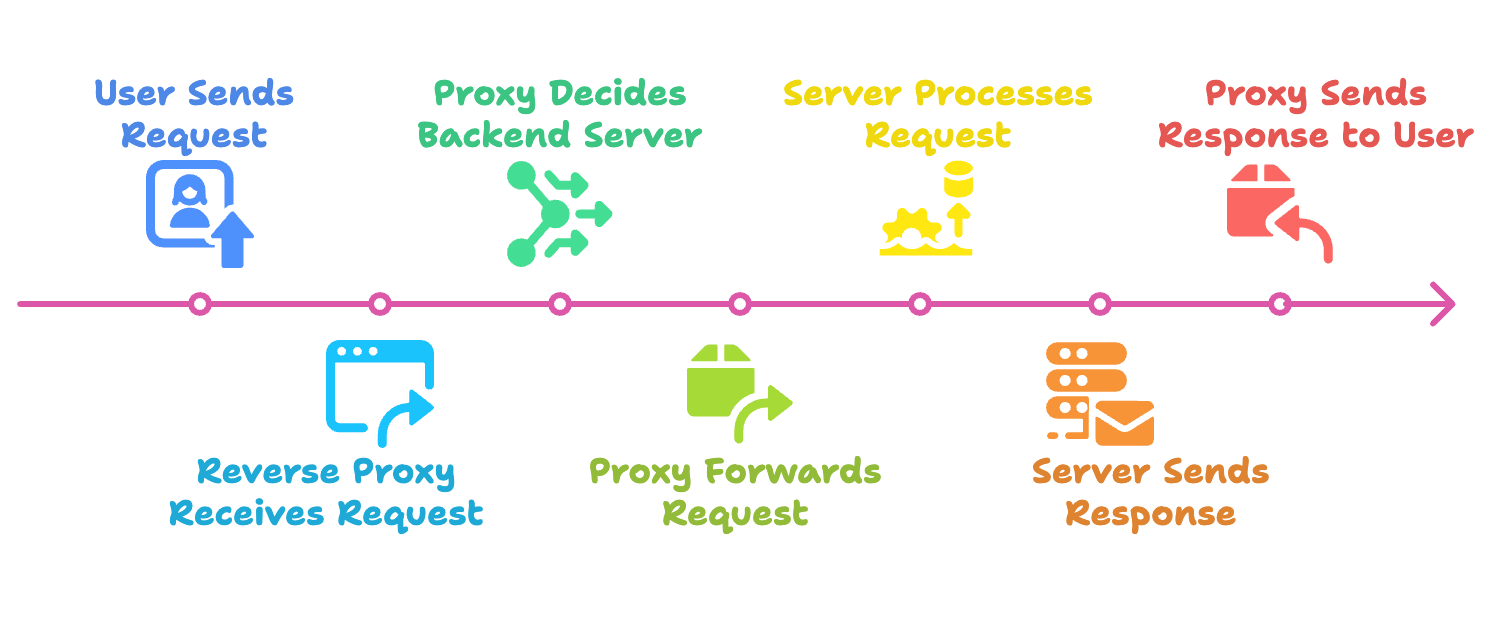
Client sends request → Goes to reverse proxy
Proxy receives request → Analyzes and processes it
Proxy forwards request → To appropriate backend server
Server processes → Sends response back to proxy
Proxy returns response → Back to the original client
Why Use One?
Load balancing: Spreads requests across multiple servers so no single server gets overwhelmed
Security: Hides the real servers from direct access
Caching: Stores frequently requested content for faster delivery
SSL handling: Manages encryption/decryption
Failover: If one server breaks, it routes traffic to working ones
Popular Reverse Proxy Software:
Nginx
Most widely used reverse proxy
Often sits in front of web applications like WordPress, Django, or Node.js apps
Cloudflare
Cloud-based reverse proxy service
Provides CDN, security, and performance features
AWS Application Load Balancer
Amazon's managed reverse proxy service
Automatically scales and distributes traffic
Apache HTTP Server (mod_proxy)
Can be configured as a reverse proxy
Common in enterprise environments
Links Around The Web
Writing Clean Functions - I wrote a blog post listing down things to keep in mind for writing maintainable and scalable functions.
Awesome-Nano-Banana-images - Internet is all hyped up with Google’s Nano-Banana image model, and this repo listed down many interesting prompts to try on the model using your image.
Cognitive Load is what matters - This is a very good repo with examples of writing readable code.
An Interactive Guide to TanStack DB - A good article to learn about TanStack DB with examples.
Liquid Glass in the Browser: Refraction with CSS and SVG - Step by step tutorial on creating Apple like liquid effect using CSS and SVG, very math heavy but quite interesting.